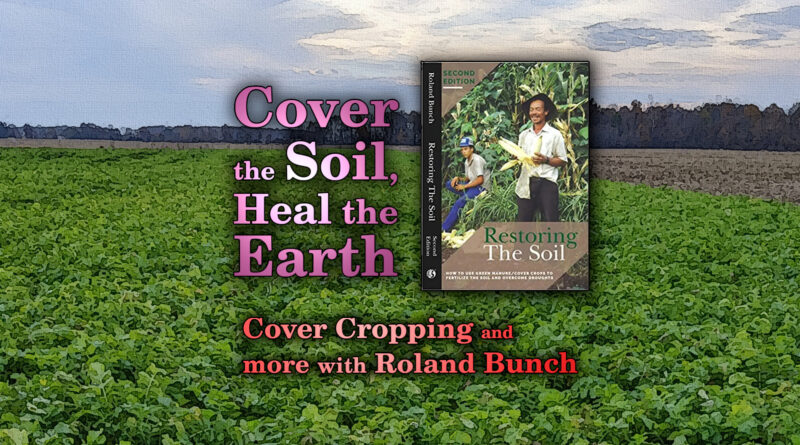
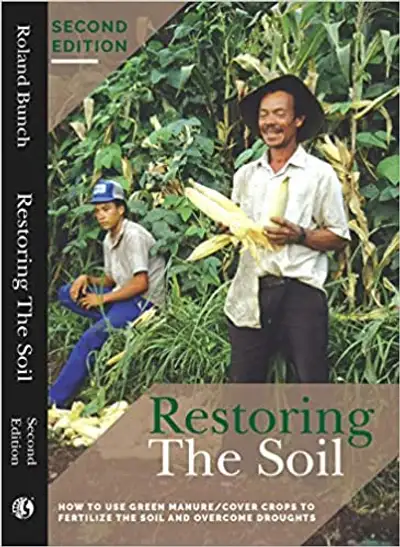
Restoring the Soil: How to Use Green Manure/Cover Crops to Fertilize the Soil and Overcome Droughts
Learn how nitrogen-fixing ground covers and native, multi-purpose trees can restore the climate and feed the people in this latest book review.
Roland Bunch has done a real big favor to the small-scale farmers of The South and to the whole world by writing the 2nd edition of his book Restoring the Soil. I just finished reading his book and am very impressed by Bunch’s grasp of the topic and its’ far-reaching implications. I suspect he is the world’s leading expert on this topic for the tropics and subtropics. Roland outlines 117 different crop/legume combinations and rotations for lowland and highland tropics and for many different parts of Africa, Latin America and Asia. Many of the species also have food production, which can be very helpful to augment main crop production, particularly when the cover crops supply food during the “hunger season”. Bunch also goes into some details about dispersed shade and intermittent shade using widely placed trees in ground crop production systems. He estimates how many farmers are using each system and where it is being practiced. These are not theories but are actual on-the-ground, successful examples used by hundreds of thousands of small-scale farmers in dozens of countries. Roland has traveled widely in his decades of international experience.
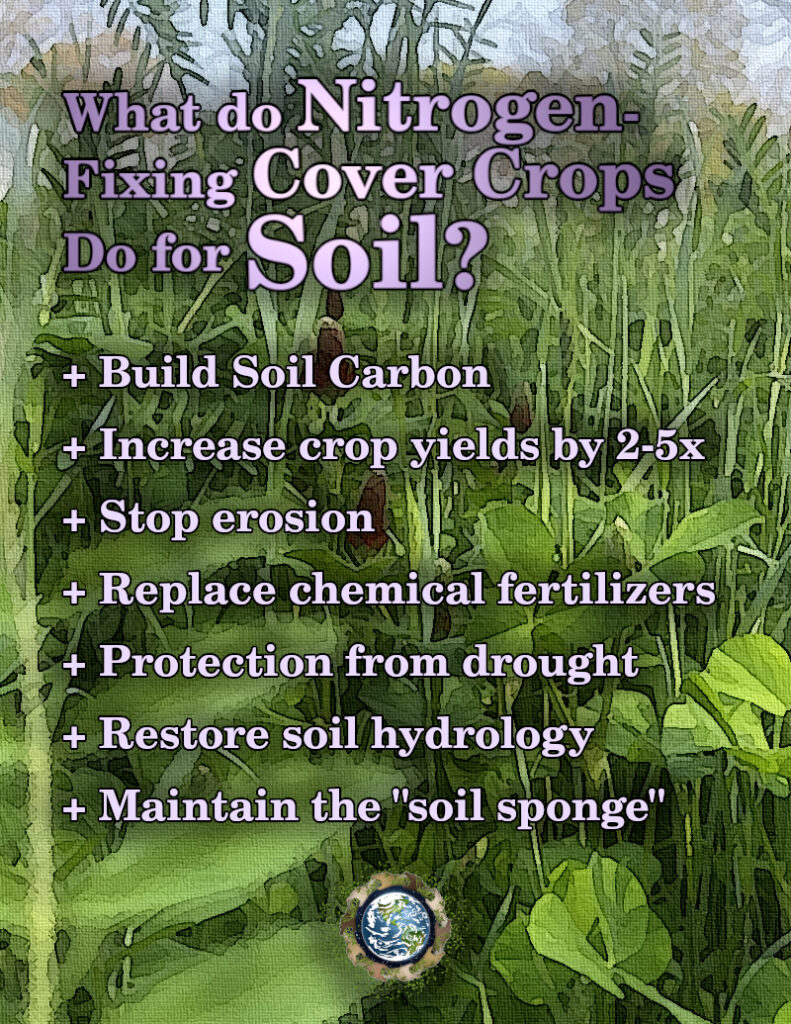
The conclusions of the book are that there are leguminous cover crops for almost every cropping system, soil and country in the world; which will build soils, increase the carbon and nutrients in soils, deepen and build topsoil, hold more water in the soil, stop erosion, increase farmer’s crop yields by anywhere from 2x to 5x, enable production in drought years, reduce or stop reliance on chemical fertilizers, lead to a drastic reduction in bare soil, lead to no-till systems and in most cases reduce labor needs. A tremendous boon to hundreds of millions of small-scale farmers around the world!
The amount of carbon sequestered, the reduced flooding and the increased transpiration makes this single solution one of the most important ways to stabilize the climate and feed the people that I am aware of. It can be done without expensive outside inputs and can be done by the farmers themselves. In most cases, the improved results are well on their way in 2 to 5 years.
http://www.ECHOcommunity.org is their website for networking with other agricultural and community development practitioners and the book can be found here with links to find it through online booksellers. Their general information website is http://www.echonet.org
I have been reading ECHO’s publications for decades and have high regard for their work.
In addition, Here is another example of the use of nitrogen-fixing cover crops to improve land yields and reduce water loss in Andhra Pradesh, India and here’s an example in the US of Gabe Brown using it to raise beef cattle regeneratively.
Here are some other resources on this subject:
- Sustainable Agriculture Research and Education. Cover crops improve soil conditions and prevent pollution.
- Lawrence Livermore National Laboratory. Cover cropping can increase farming yields.
- Souza, V. et al. Cover crops enhance soil health, crop yield and resilience of tropical agroecosystem.
- Echo Community. Green manure / cover crop resources.
- USDA Climate Hubs. Cover cropping to improve climate resilience.
- Abdalla, M. et al. A critical review of the impacts of cover crops on nitrogen leaching, net greenhouse gas balance, and crop productivity.