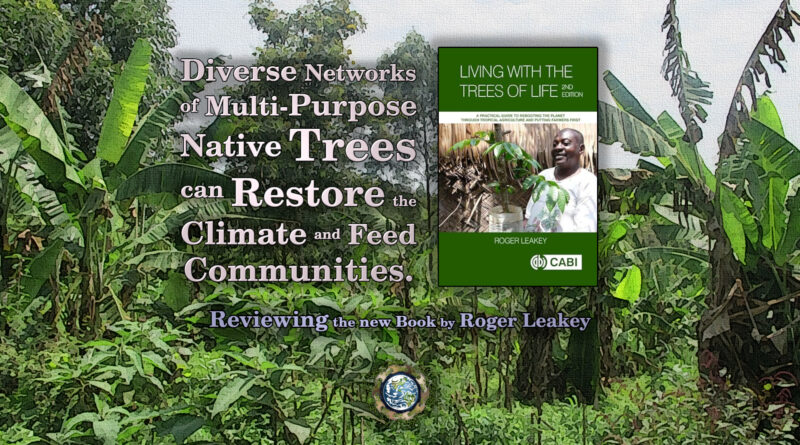
Living with the Trees of Life – how Native, Multi-Purpose Trees can Restore the Climate and Feed the People.
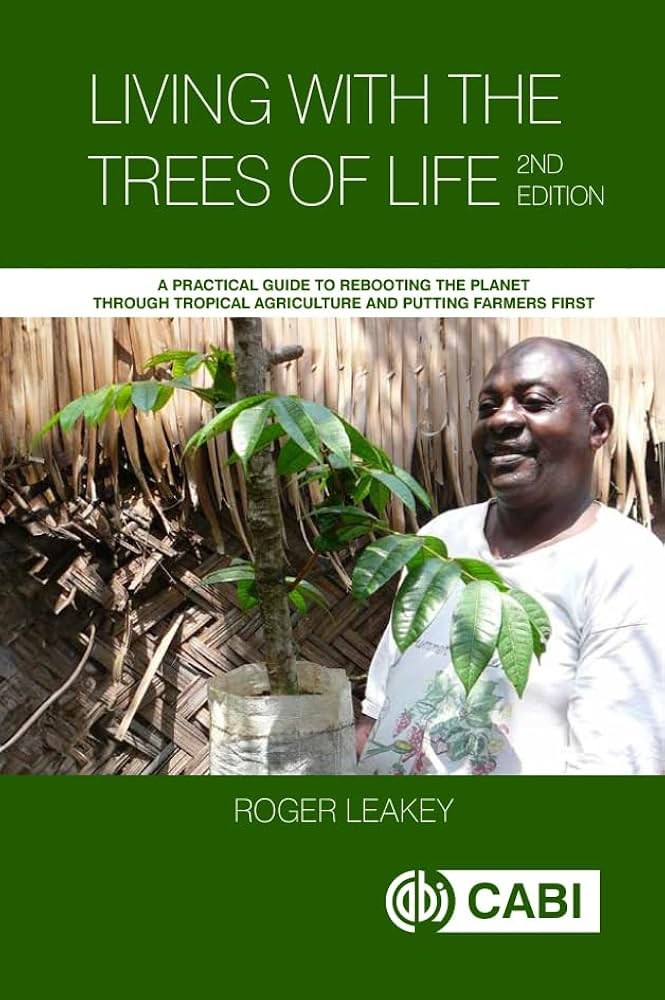
Today we are reviewing another inspiring and informative book, this time it’s:
Living with the Trees of Life: A Practical Guide to Rebooting the Planet through Tropical Agriculture and Putting Farmers First. Second Edition. 2024, CABI (CAB International, UK). 250 pages. by Roger Leakey
The book can be purchased at CABI Digital Library or Amazon.

Roger Leakey has done a real big favor to the small-scale farmers of The South and to the whole world by writing the 2nd edition of his book Living with the Trees of Life: I just finished reading his book and am very impressed by Leakey’s hands-on international experience. He has spent decades working with small farmers and researchers throughout the tropics and is probably the most knowledgeable person on how to propagate tropical trees from vegetative cuttings. I suspect he is the world’s leading expert on this topic for the tropics and subtropics.
His findings complements Roland Bunch’s quite well. Roland mainly talks about herbaceous species along with some trees. Leakey’s information is mainly on how to identify which native tree species to use and he focuses on food-producing trees (usually with multiple uses). Leakey also includes a lot of best practices to use in vegetative propagation of these trees from various kinds of cuttings. Leakey’s form of agroforestry (described as ‘Land Maxing’, which adds substantial income generation to common land restoration practices) combined with Bunch’s recommendations for nitrogen-fixing ground covers and crop shading make a great combo and should be considered across the global South. He gives a lot of tips on how to identify and domesticate native species of useful trees to select for best species traits that the farmers want. He includes a list of five priority species for domestication in:
- Humid lowlands of West Africa
- The Sahel
- Southern Africa
- Peruvian Amazon
- Indonesia
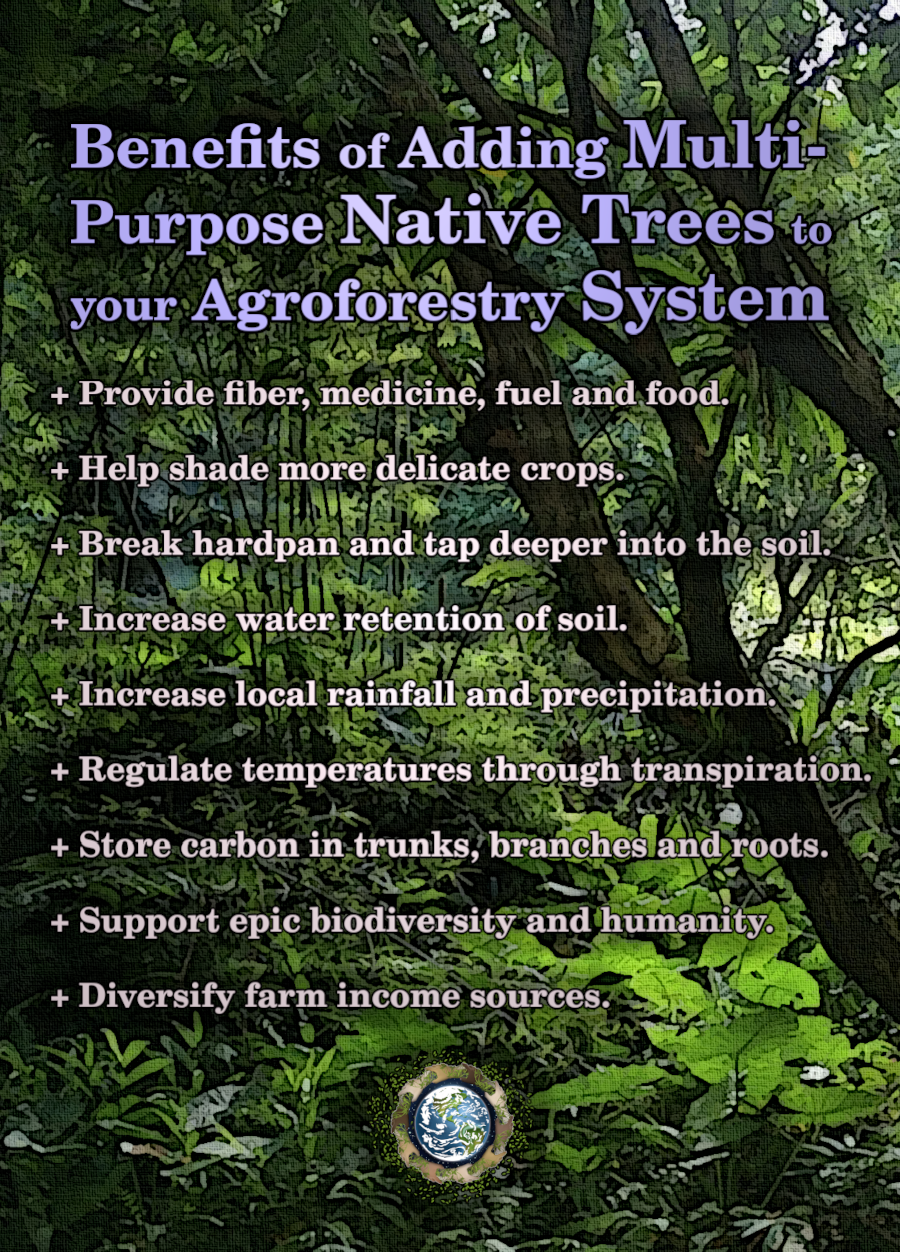
Leakey’s work has far-reaching implications. The amount of carbon sequestered, the amount of ground shaded and the increased transpiration makes this single practice one of the most important ways to stabilize the climate and feed the people that I am aware of. If you like the work of Roger Leakey, you may appreciate Tony Rinaudo, Ernst Gotsch, or Alan Watson Featherstone. You may also enjoy this presentation we did with Muhangi Musinga earlier in the year about this subject.
We are happy to announce that Roger Leakey will be one of the presenters at our Global Earth Repair Convergence.
Some other Resources on this Subject:
- “Agroforestry and Biodiversity.” Sustainability, vol. 11, no. 10, 2019. https://www.mdpi.com/2071-1050/11/10/2879
- “Agroforestry and Biodiversity Conservation in Temperate Agroforestry Systems: A Review with Focus on Pollinators.” Forests, vol. 10, no. 11, 2019. https://www.mdpi.com/1999-4907/10/11/981
- “Agroforestry Increases Soil Carbon Sequestration, Especially in Arid Areas: A Global Meta-Analysis.” Catena, 2025. https://www.sciencedirect.com/science/article/pii/S0341816224008646
- “Agroforestry Systems Enhance Soil Moisture Retention and Aquifer Recharge in a Semi-Arid Mexican Valley.” Water, vol. 17, no. 10, 2025. https://www.mdpi.com/2073-4441/17/10/1488
- “Agroforestry Systems for Soil Health Improvement and Maintenance.” Sustainability, vol. 14, no. 22, 2022. https://www.mdpi.com/2071-1050/14/22/14877
- “Agroforestry’s Contribution to Livelihoods and Carbon Sequestration in East Africa: A Systematic Review.” Trees, Forests and People, vol. 14, 2023. https://www.sciencedirect.com/science/article/pii/S266671932300064X
- Castle, Sarah E., et al. “Evidence for the Impacts of Agroforestry on Ecosystem Services and Human Well-Being in High-Income Countries: A Systematic Map.” Environmental Evidence, vol. 11, article no. 10, 2022. https://environmentalevidencejournal.biomedcentral.com/articles/10.1186/s13750-022-00260-4
- “Environmental Benefits of Agroforestry Practices.” Agriculture.Institute, 2024. https://agriculture.institute/horticulture-agro-forestry-systems/environmental-benefits-of-agroforestry/
- “Impact of Long-Term Agroforestry Systems on Carbon Pools and Sequestration in Top and Deep Soil Layers of Semi-Arid Region of Western India.” Forests, vol. 16, no. 6, 2025. https://www.mdpi.com/1999-4907/16/6/946