About the Global Earth Repair Convergence
Save the date: May 7-11, 2026!
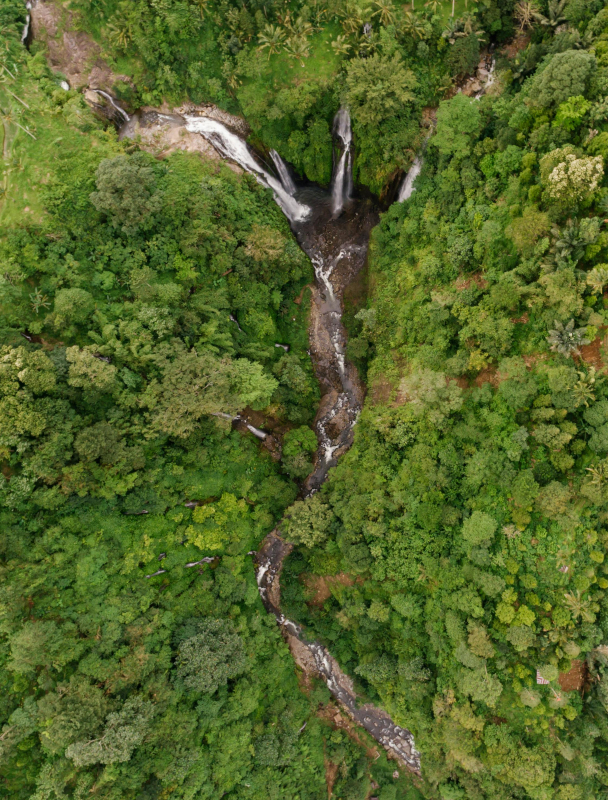
“Greening the Planet to Cool the Planet” – Trees, plants, soils and the hydrological cycle offer the quickest, cleanest, safest, and most accessible ways to regenerate the planet and cool the climate.
Join us for a hybrid event – in person & online – to stop the destruction of the biosphere and restore the Earth! Trees, plants, soils and the hydrological cycle offer the quickest, cleanest and safest routes to regenerate the planet – these and so many more techniques will be featured in this event. We are putting our minds and hearts together to envision a path forward, network, share information and visions, and celebrate our collective work to heal this beautiful planet! The convergence will involve:
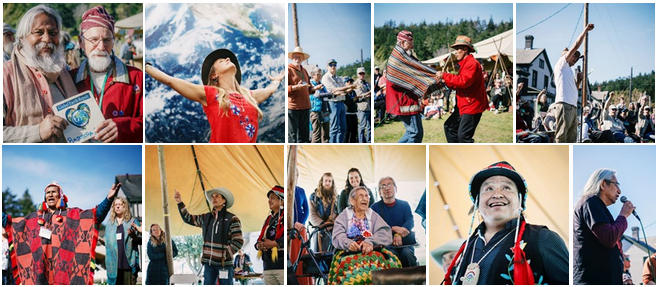
- 500+ in-person participants at Fort Worden Conference Center, in Port Townsend, Olympic Peninsula, Salish Sea bioregion, Turtle Island. (We had 500 participants in our 2019 conference.)
- 1,000+ simultaneous participants online. (We had 500 online participants in our 2022 Online Summit.)
- Participation by leading restoration practitioners, scientists, grassroots organizers, farmers and Indigenous people involved in Earth Repair.
- Strong Indigenous leadership and participation – building upon large Indigenous contingents in 2019 and 2022.
- Hundreds of organizations represented through workshops, presentations, vendors and panels.
What is Earth Repair?
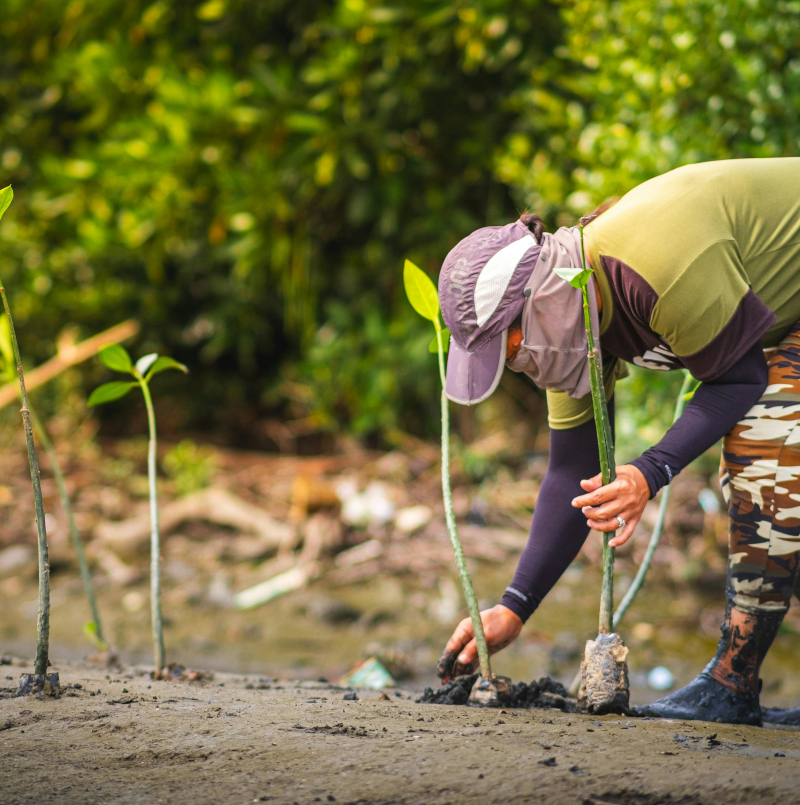
Earth Repair is about humans doing regenerative actions for the planet’s ecosystems and life forms. Other terms synonymous with earth repair are:
– Ecosystem restoration.
– Nature-based solutions.
– Natural climate solutions.
– Earth-healing.
– Stewardship
– Biomimicry
– Geo-biomimicry
– Geotherapy
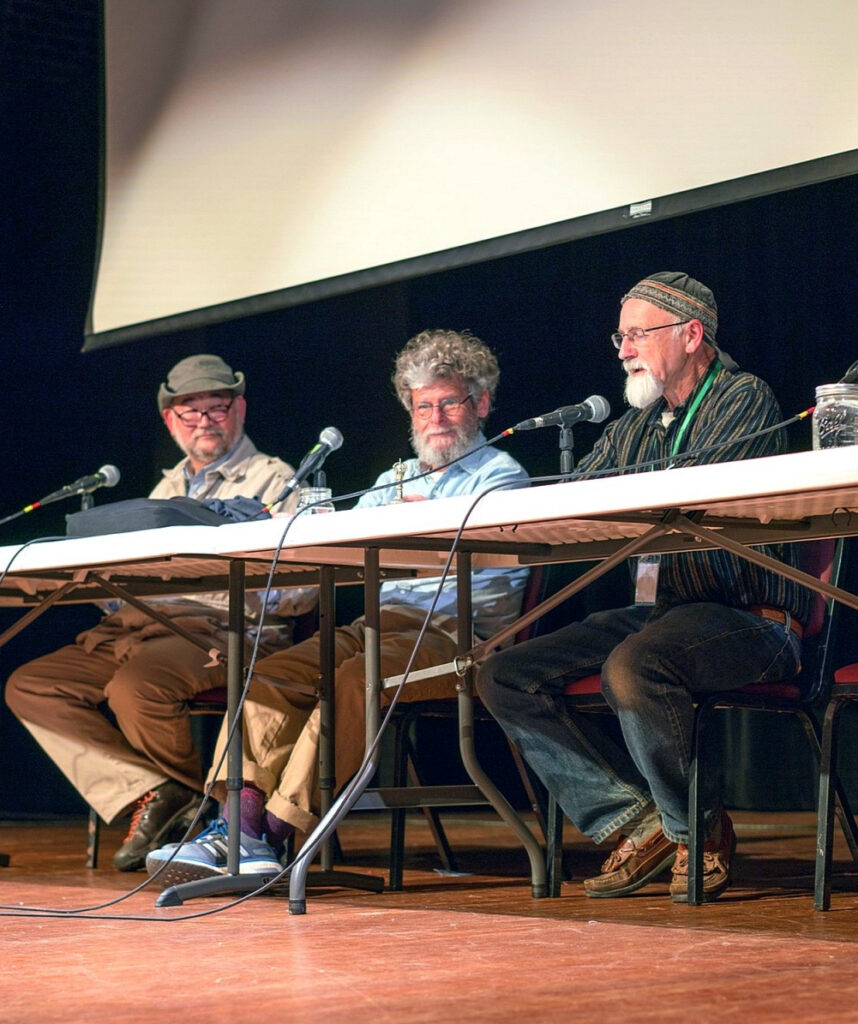
Who is Organizing This, and What Are our Goals?
This event is hosted by the Global Earth Repair Foundation and United Earth Networks, in Partnership with the EcoRestoration Alliance. Key to this event are real and accessible climate solutions centered around our theme, “Greening the Planet to Cool the Planet.” Key points of these solutions are:
- Rehydrate the land by encouraging the landscape to hold more water.
- Raise soil organic matter content and build the soil sponge.
- Recharge and refill aquifers – restoring ponds, lakes, springs and streams in the process.
- Increase the vegetation cover of the Earth substantially.
- Switch much of the cropland now dedicated to annual crops to agroforestry.
The following video was made as a synopsis of some of the main themes and messages from the last two events, and an introduction to the next one:
Our experts aren’t just talking about change, they’re creating it today.
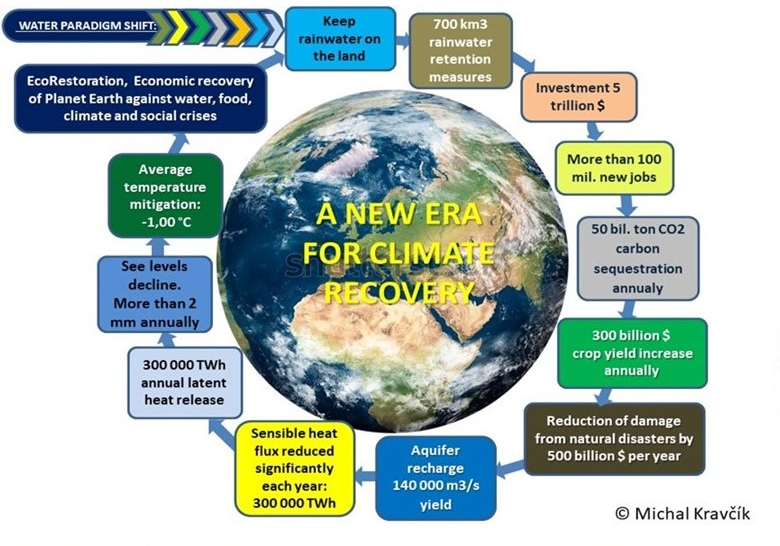
We are assembling leading scientists and restoration practitioners that are working on existing, proven effective strategies. We already have commitments from some of the best on the planet. We are excited to bring them together so that they can talk to each other, create new synergies, and contribute their ideas for Global Earth Repair. They will teach in-person and online participants through workshops and presentations. These remedies have the following effects:
- Encouraging the regulation of temperature and states of water directly through evapotranspiration.
- Increasing bio-aerosols that serve as precipitation nuclei for cloud formation.
- Reducing haze – which has a warming effect – and encouraging clouds, which cool the land and waters.
- Strengthening the small water cycle and reducing intense (damaging) rainfall that leads to flash floods.
- Strengthening the biotic pump and flying rivers through increasing forest cover of the landscape.
- Increasing gentle, useful rainfall in drylands.
- Reducing hurricanes and storm intensity by increasing bio-regulation of weather formation.
- Lowering sea levels by slowing the course of water over the land (more in and on the land, less in the ocean).
- Sequestering carbon in soils, vegetation and biomass.
- Reducing global average temperature by 1 degree Celsius – by re-greening between 4% and 12% of the land mass (300 million to 1 billion hectares, estimates vary).
Restoring the Regenerative Water Cycle. (click to expand)
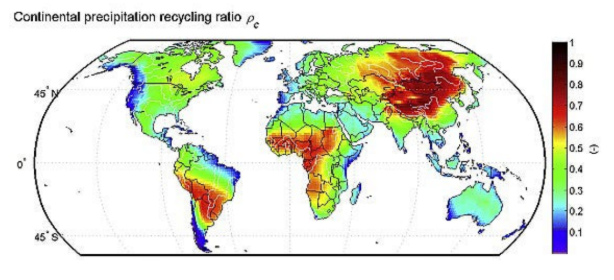
We know that CO2, methane and other greenhouse gases dominate the conversation around climate currently and are the main focus of other climate conferences, such as COP. We also know, however, that climate is affected by the restoration of a restorative water cycle, including the large and small water cycles. The small water cycle has to do with the recycling of moisture and precipitation in the local environment itself, and is largely mediated by vegetation. In the lack of a healthy and mature ecosystem on the land, this cycle is practically nonexistent. This smaller cycle feeds into the large water cycle by mediating, regulating and tempering the precipitation of moisture and the journey of rains from the ocean across the lands, with help from plants and fungi that release bio-aerosols in the form of spores and pollen, and through the direct control of evapotranspiration (evaporation + transpiration). In other words, plants and their partners (animals, microbes, and fungi) can collectively control the weather and ultimately, the climate. It’s precisely this functional regulation of the states of water on this planet by ecosystems themselves that we hope to highlight and help restore.
Highlighting Marine Ecosystems. (click to expand)
We also want to focus highly on Marine Ecosystems. These ecosystems have a huge effect on local weather and the global climate. Greening off the coasts, by restoring kelp forests for example, is seldom mentioned in these discussions, but it greatly affects the climate in these regions. These are complex solutions that deserve their fair share of discussion time. They also increase the overall abundance of ocean life for all living things, humanity included. These remedies include:
- Reduce ocean acidity to reduce coral bleaching and preserve the living webs of the ocean.
- “Green up” the oceans by encouraging plankton, seaweed, sea grasses, coastal marshes, mangroves, coral and general biodiversity.
- Build up the bottom of the food chain, creating reverberations that cascade up the food web.
- Produce bio-aerosols that precipitate the nuclei that form marine cloud layers.
- Stop over-fishing and ecosystem-damaging fishing methods.
- Give special care to restoring the population of whales and other cetaceans.
- Create more marine preserves, sanctuaries for biodiversity.
- Restore watersheds so that streams and rivers flowing to the ocean are free of sediment and pollution.
Addressing the Social Factors of Earth Repair. (click to expand)
There are many social factors that affect the process of achieving these solutions. In the interests of a well-rounded approach to achieving a healthy planet there will be workshops and discussions on personal health, economic systems, governance, social equity, climate justice, Indigenous rights, and much else.
Human sovereignty depends on food sovereignty. The Convergence emphasizes earth repair that produces food and natural resources for people everywhere. Restoration of degraded landscapes can include food production that leads to food sufficiency and food sovereignty. There is no excuse for hunger, malnutrition or starvation anywhere in the world. Agroforestry, permaculture, regenerative agriculture, agroecology, syntropic farming and related systems can create/restore ecosystems which are lush in food and useful plants as well as in ecological function. Partially based on native plants and, in many places, based within a matrix of more wild ecosystems. It is in the self-interest of the subsistence farmers and small-scale farmers of the Global South to transition to agroforestry, etc to green up the planet and produce more food and more income and build healthy local economies. Releasing the potential of small-scale farmers is the best chance we have of achieving global regreening.
The Convergence welcomes Indigenous people and people from the Global South, in person and online. Indigenous knowledge, wisdom and worldview are much needed in these times. There will be Indigenous prayers, ceremony, keynotes, and presenters; an Indigenous track and caucus. There will be an African component.
We will bring together representatives from many earth repair organizations, alliances and coalitions who are part of the movement in its many manifestations. Civil society and grassroots coming together to share information, inspiration, and support one another and build the movement.
An important goal is helping individual Earth restoration practitioners and organizations begin to see their work in the context of a growing global movement. Right now the Earth Repair movement is fragmented and there are a lot of people working in isolation. Becoming more aware of the greater movement will bolster everyone’s spirits.
The Convergence can increase public awareness about the earth repair movement and these solutions. The above solutions do not get much attention in the dominant media. The dominant narrative is “emissions reductions to cool the climate”. The above solutions are low-tech solutions that need few inputs of fossil fuel, metals or industrial material. Most of it can be accomplished with local labor, local materials, and local nurseries. These solutions offer the most cost-effective and fastest way to cool the planet. Very achievable. Everyone can green up a small, or big, patch of the planet. Every leaf counts. It offers our best hope of avoiding a global collapse. Earth Repair should be the most important and best-funded movement on the planet.
This Convergence is organized by the grassroots, for the grassroots. Representatives from hundreds of grassroots organizations will participate. Media, policy-makers and funders are invited to participate but the grassroots is in charge. The Global Earth Repair Convergence is working for the whole planet. Please contribute to our collective success. The Earth needs as many earth repair actions and events happening as possible all around the world, at all scales, for a couple generations.
Tracks & Topics at the Convergence
Tracks are subjects under discussion but also directions and actions that individuals and groups can take out of many; there is so much happening here that it can be overwhelming, and you may find yourself called to some things more than others. Many tracks are the same as the 2019 and 2022 events, and more may still emerge in the months leading up to, and even during, the Convergence:
Indigenous Peoples
Indigenous Wisdom
Ethnobotany
Ethnoecology
Tribal Stewardship
Tribal-Led Restoration
Canoe Journeys and Cultures
Ceremony & Ritual
Respectful and Effective Alliance
Perspectives from the Global Majority
Swidden & Managed Burning
Marine & Watersheds
Coral Reef Restoration
Small & Large Water Cycles
Kelp Forest Restoration
Marine Reserve Creation
Mangrove Restoration
Salish Sea Restoration
Orca Population Recovery
Dam Removal
Stream and River Restoration
Landscape Water Retention
Forests & Trees
Reforestation
Restoration Forestry
Agroforestry
Silvopasture
Food Forests
Medicine Forests
Miyawaki Forests
The Biotic Pump
Flying Rivers
Plant Allies
Pollinator Gardens and Patches
Halophytes & Bio-Remediation
Ecosystem Succession
Windbreaks & Hedgerows
Swales & Grassed Waterways
Chop & Drop
Herbs & Healing
Native Seed Collecting
Invasive Plant Control
Polycultures & Plant Guilds
Animals
Holistic Management & Grazing
Biodynamic Beekeeping
Non-Human Alliances
Wildlife Corridors
Small Animal Husbandry
Animal Communication
Beaver Reintroduction
Species Conservation
Keystone Species
Animal Rights
Soils & Minerals
Myco-Remediation
Soil Microbiome & Invertebrates
Cleaning Contaminants
Biochar
Soil Remineralization
Keyline Subsoiling
Algal Inoculations
Mulches (Organic and Rock)
Cover Cropping
Green Manures
Earth & Water Works
Swales, Berms, Half-moons, Pitting, Gabions, Ponds, Gully-Stuffing, Check Dams, Keylines, Water Flow Design, Rainwater Harvesting, Land Texturing, Contour Planning, Terracing, Johads, Bunds, Fascines, Hugelkultur
Regenerative Farming
Syntropic Agriculture, Organic Farming, Agroecology, Permaculture, Jadam, Korean Natural Farming, Masanobu Fukuoka, Biodynamic Agriculture, Grow Biodynamic, Zero Budget Natural Farming, Community Managed Natural Farming, Regrarian Agriculture
Social Repair
Social Justice and Earth Repair, Ceremony, Art, Song and Music, Horticultural Therapy, Grassroots Economics, Regenerative Financing, Bioregional Organizing, Culture Repair, Movement Building, Environmental Philanthropy, Environmental Griefwork, Climate Psychology, Ecovillages, Environmental Law, Digital Storytelling, Messaging
Like what you’re hearing so far? Don’t be a wallflower – join in the dance! Tickets are going on sale soon!! Also, if you want to do more to help us make this vision a reality, learn more about getting involved and let us know if you are interested in any number of volunteer or paid staff positions available. If you’re curious to know more about the Global Earth Repair Convergence, click the banner below: