Challenging the “Norms” of Land Ownership to Achieve Ecological Regeneration and Climate Repair
As we face climate collapse and economic instability, with the pressure of globalization and the declining dollar and increasing food scarcity pressing in on communities and individuals alike, it’s never been more important to build regenerative communities for the sake of local and collective resilience. We desperately need a return of the commons and the collectivization of farmland, as well as a bold re-examining of some of our culture’s cherished shibboleths around land ownership. Into this need steps an organization dedicated to the craft of marrying farmers with land and re-connecting communities around food and environmental restoration: The Farmer’s Land Trust. Though not strictly a trust itself, this organization has made it their mission to help setup and codify several successful trust start-ups and communities around the country, providing documents and organizational blueprints for interested individuals to get growing in the best way possible – and building on their successes to expand their efforts and those of like mind, elsewhere!
Also check it out on Facebook reels here: https://www.facebook.com/reel/3240324689458905
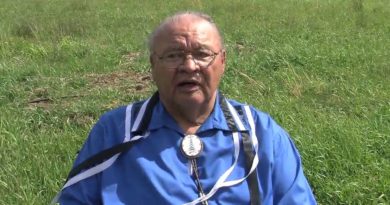
We met up with one of the founders of this organization, Ian McSweeney, for a recorded chat that explored practical solutions for strengthening local foodsheds and ecosystems and building community – but also dove into the foundations of land ownership itself, such as colonial ideas of wilderness and agricultural use as compared to Indigenous concepts of humble stewardship of nature in co-collaboration with the living Earth. We highlighted inspiring examples of change from around the world, such as Kenya’s Grassroots Economics Foundation, Russia’s more recent back-to-the-land movement, and eco-villages a little closer to home. With India’s “Water Cup” and the Sahel’s “Great Green Wall,” communities of like-hearted human beings are banding together to improve their environments, secure their collective futures, and repair the planet (including net positive effects for the global climate).
During this discussion, we discussed the way that zoning laws and bylaws intersect to thwart some attempts at building real collective land resilience, but also how individuals and communities can study these things and find help in founding their own communities and organizations. Unfortunately, we live in an age where many of the backwards and even racist policies of the not-too-distant past still affect us even in an era when we are beginning to see the chickens coming home to roost in the forms of desertification, climate disaster, and loss of livelihood. But through means such as 501(c)25 nonprofit structures, land trusts, cooperative markets, and other nifty concepts, we ordinary grassroots-level people can compete with international conglomerates, wall street, and the literal machines (one of the biggest competitors for farmland and aquifers now are data centers) to claim the present and future again.
Also, as an added bonus, here are some resources provided by our founder Michael Pilarski, as mentioned in the video –
Resources for Farmers Land Trust listeners
Examples and Resources for communal land stewardship and intentional communities:
Auroville, India
Ever Slow Green – Full Movie (S.O.S. from Auroville)
https://www.youtube.com/watch?v=51npNzfj2zY&t=196s
One of the most famous intentional communities. Over the years they restored a degraded landscape to one of the best examples of the indigenous dry forests on the east coast of India.
Gaviotas community, Colombia
Gaviotas: A Village to Reinvent the World.
In the late 1960s, a young Colombian development worker named Paolo Lugari wondered if the nearly uninhabited, infertile llanos could be made livable for his country’s growing population. He had no idea that nearly four decades later, his experiment would be one of the world’s most celebrated examples of sustainable living: a permanent village called Gaviotas.
Village Homes, Davis, California
An exemplary suburban development in the U.S. from a permaculture point of view.
https://video.search.yahoo.com/yhs/search?fr=yhs-mnet-001&hsimp=yhs-001&hspart=mnet¶m1=4056¶m2=84481&p=village+homes+davis+ca&type=type9097303-spa-4056-84481#id=2&vid=ba6454d088c8770a89d513c8cca1e771&action=click
Ejidos, Mexico
Ejidos in Mexico are communal landholdings where ownership is collective to a community of farmers (ejidatarios), not a fixed acreage for the entire system. The total amount of ejido land is vast, covering approximately 50% of Mexico’s territory (over 100 million hectares or more than 247 million acres). 30,000 are still going strong, and they manage half of Mexico’s territory.
Andhra Pradesh Community Managed Natural Farming
From 40,000 farmers in 2016 to 1,130,000 farmers in 2025, aiming for 5 million next. The largest agroecology movement in the world, scaling up to make a difference.
https://apcnf.in/
Nepal’s Community-Based Forest User Groups
14,337 of them in 2025 — one in three Nepalis are members of a forest user group.
https://fecofun.org.np/
Grassroots Economics Foundation, Kenya
Will Ruddick
https://www.grassrootseconomics.org/
https://willruddick.substack.com/p/grassroots-economics-the-book-is
Intentional Communities Directory
Global Ecovillage Network (GEN)
Farmer-Managed Natural Regeneration, Niger and Africa
Known formally as World Vision’s Natural Resources Management Specialist, but known more famously as The Forest Maker, Tony Rinaudo helped transform millions of hectares of dry land in Niger. For many people, Tony is certainly an environmental hero, after making a positive impact on food security, environmental sustainability, and resilience.
https://fmnrhub.com.au/tony-rinaudo-the-forest-makers/
Alan Savory and Holistic Management
https://savory.global/holistic-management
Richard St. Barbe Baker – Men of the Trees
Landcare Movement, Australia
https://landcareaustralia.org.au
Society for Ecological Restoration (SER)
https://www.ser.org/
Article: Climate Change and the Scaling Up of Restoration: Welcome the Opportunities, Recognize the Dangers by Paddy Woodworth
https://www.ser.org/page/SERNews3122/Climate-Change-and-the-Scaling-Up-of-Restoration-Welcome-the-Opportuni.htm
Civilian Conservation Corps (CCC), WPA, Soil Conservation Service
https://en.wikipedia.org/wiki/Civilian_Conservation_Corps
UN Decade on Ecosystem Restoration
https://www.decadeonrestoration.org
Resources for Community Organization
Two wonderful resources/services I just learned about from the R3.0 online conference on September 9–11, 2025:
Omni Mapping – Organization templates and a way for communities to create their own maps.
https://omnimapping.org/
Bloom
https://bloomcommunityoutreachorganization.com/
Ethnoecology in Pre-Colonial North and South America
Ethnoecology is the study of the complex, dynamic relationships between people, their cultural understanding of the environment, and the natural world itself. Land was not owned but communally managed and stewarded.
“The land does not belong to us. We belong to the land.” All animals, plants, and natural systems are relatives of the humans.
Recommended Reading:
Time and Complexity in Historical Ecology: Studies in the Neotropical Lowlands (Historical Ecology Series)
By William L. Balee and Clark L. Erickson
Amazon Agroforest
https://core.ac.uk/download/214162889.pdf
https://www.abebooks.com/servlet/BookDetailsPL?bi=32217239049&dest=usa&ref_=ps_ggl_18382194370&cm_mmc=ggl-_-US_Shopp_Trade0to10-_-product_id=COM9780933452855USED-_-keyword=&gad_source=1&gad_campaignid=17190383930&gclid=Cj0KCQjw_rPGBhCbARIsABjq9cfAYrbq96rY4DsutAq3GDar7Iq3ipWLQjoiqB8YyVatPaCvBQRtPKoaAgz4EALw_wcB
Historical Ecology: Cultural Knowledge and Changing Landscapes (School for Advanced Research Advanced Seminar Series)
Matriarchal Societies, Pre-Patriarchy
While no large, historical matriarchies are known, examples of matrilineal or matrifocal societies with elements of female power include the ancient Minoans, the historical Iroquois and Hopi tribes, and the modern-day Minangkabau of Indonesia, Mosuo of China, and Khasi and Garo of India. These societies are not always matriarchal in the strictest sense, as they don’t necessarily feature women in all positions of power, but they do demonstrate systems where property, inheritance, and kinship center around the female line.
Ethnobotany and Ethnoecology Resource Guide
By Michael Pilarski and Allison N. Lutz (1999), 78 pages. An international overview. The guide reviews 545 books and articles, 41 websites, 57 organizations, 40 periodicals, 40 publishers, 28 educational institutions, and 13 ethnobotanical gardens.
Available from
https://www.etsy.com/listing/999704636/ethnobotany-ethnoecology-resource-guide