How to Do Earth Repair in the Fall – Ecosystem Restoration Edition
Autumn is the season when the land slows down and prepares for rest. It’s also one of the most effective times of year to work with nature instead of against it. If and when we do intervene during this time – and if we do, we do so carefully and respectfully – we work to shape the land for water retention, set the scene so that the Earth can sup on the raw materials it needs to restore living soils, and generally create the conditions for next year’s growth.
While the upper world begins to fade in color, dry out, and fall away, underground life is waking up. The hearth of the earth, the soil itself, begins to pull resources to itself as everything seems to nestle into its embrace, while preparing to use less energy and optimize internal growth. Tree roots stretch deeper and fungi expand through the soil as a menagerie of decomposers begin their multifaceted and patient work. This quiet window between summer’s heat and winter’s freeze is an ideal moment for restoration. Some well-placed interventions can help optimize a more abundant spring so that each year, the ecosystem gets richer.
Here are a few key ways to work with the changing season to maximize the Earth’s annual recovery period and help life thrive on the land.
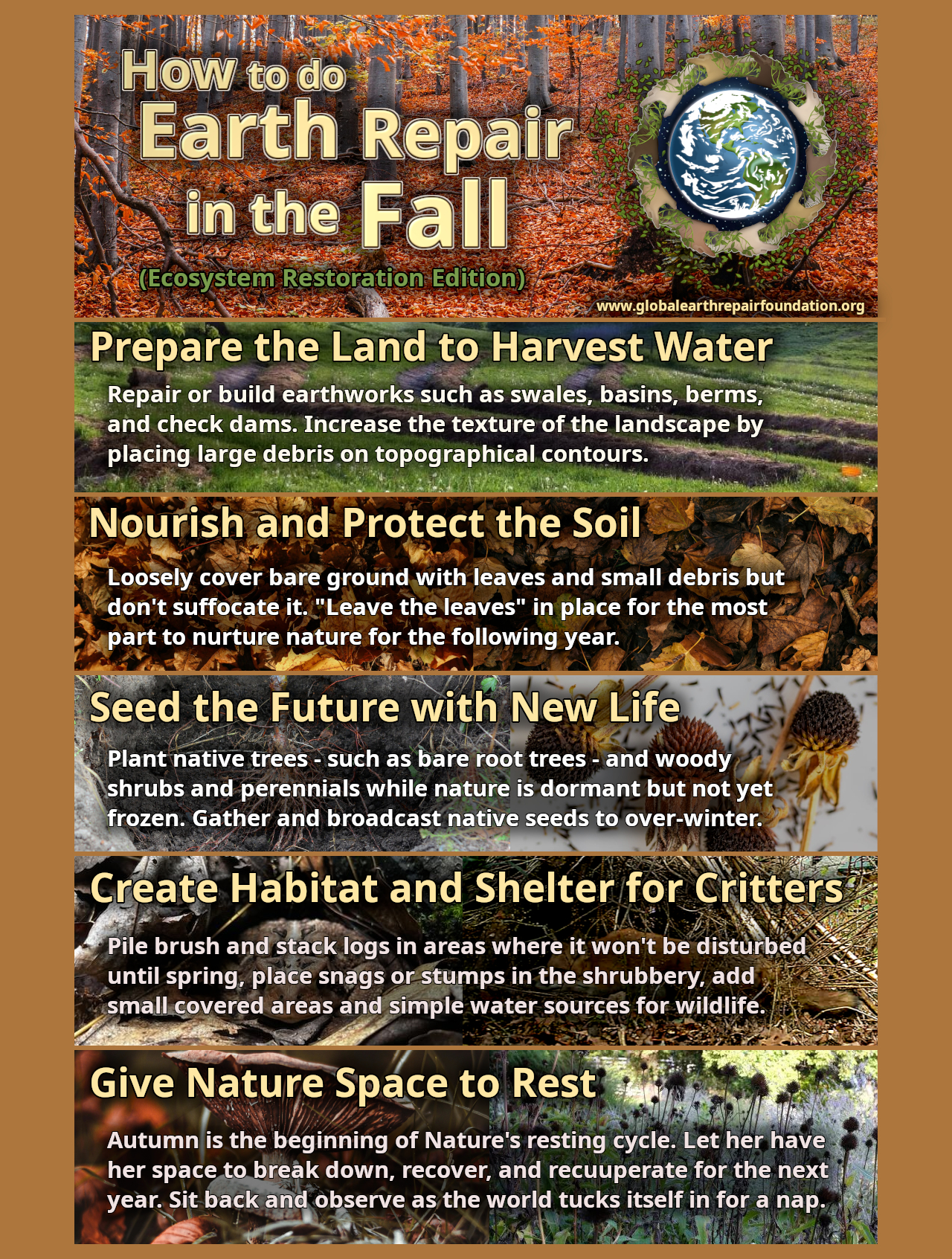
Prepare the Land to Harvest Water
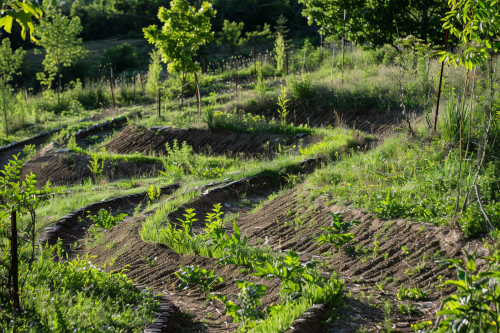
Before winter storms arrive, look closely at how water moves across your landscape. Where does it flow too fast? Where does it tend to pool up? Where is water running off or through your built environment, such as buildings, ditches, roads and paths? Where you can, use this time to shape the land in small but meaningful ways: digging or repairing swales, berms, basins, or check dams that help slow runoff and let water soak in.
If you can’t dig for some reason – and there are plenty, depending on the situation – this process can be additive. Even simple or seemingly small actions, like placing sticks, logs, lawn clippings, or rocks along contour lines, increase the texture of the land in an organized way and help trap sediment trying to move down-hill. These micro-catchments rebuild fertility over time and protect streams, springs, and soils from erosion. Every drop of water you hold in place this season is a small act of climate repair. This water is your land’s wealth – the more you set it up to hold at this time, the more resilient it will be against drought and even fire in the warmer seasons.
Nourish and Protect the Soil – “Leave the leaves!”
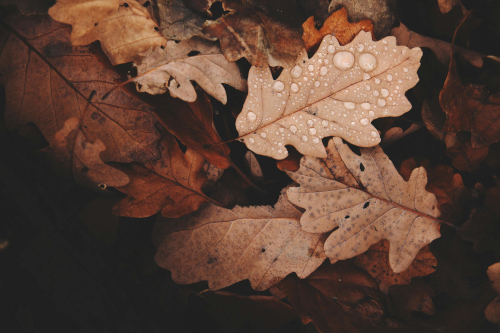
Whether it’s in full bloom or during its “down times”, everywhere you look, Nature covers herself up. Bare soil is a wound on the landscape. Autumn gives us the materials to heal it. Help this process by spreading leaves, straw, and small woody debris across exposed ground, but avoid piling it so thick that it suffocates any critters that might be holed up below – or the soil itself. Not only are you providing it the meal it will slowly consume for the following months, you are helping insulate it from the freezing cold.
Let the fallen leaves stay where they land whenever possible. The forest floor renews itself each year with this layer of organic matter, feeding the invisible world of microbes and insects that turn decay into life. Butterflies and other insects lay eggs on the leaves, often targeting a particular species they have adapted alongside. These and other relationships define the balance and interconnected dance of nature. What seems like waste or death to our culture is just the necessary face of life – and we should fight the impulse to impose our cultural values or beliefs on nature’s processes wherever possible.
We understand this can cause issues sometimes with homeowner’s associations, landlords, or neighbors, depending on where you live and what the artificial standards of “upkeep” are. Maybe if you have this conversation with someone and they are reluctant to change their ways, or even try to force you to remove the leaves – send them to this page, and they can learn something! When we “leave the leaves,” we’re protecting the living network beneath our feet and giving next year’s growth a head start.
Seed the Future with New Life
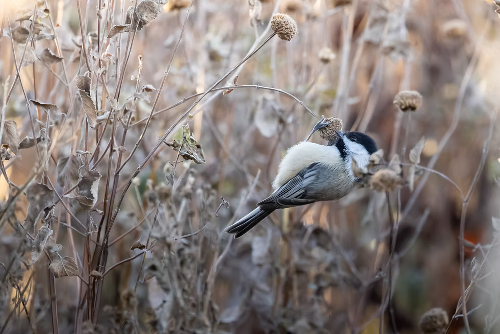
Now – not necessarily spring – is the time to plant for the next generation. We are conditioned in our culture to start our annual gardens in the spring – but for the year-round ecosystem restoration practitioner, fall is a critical time to expand the threshold of life. The cool, moist conditions of fall are ideal for planting native trees, shrubs, and deep-rooted perennials.
As the world rests above ground and freezes above the leaf litter blanketing everything, roots can quietly establish themselves before the soil turns rigid with ice. – In some regions, depending on your climate and microclimates, even the most delicate baby plants can germinate and over-winter as a group without being struck down by the freeze. – By spring, they are already prepared to thrive and shoot up together for the light.
Gather and broadcast native seeds during this season so they can lie dormant over winter. Many species require cold stratification to germinate naturally, so scattering them now mimics the cycles of wind and wildlife that have always shaped the land. Every seed placed in autumn is a promise to the future ecosystem that will rise here again.
Create Habitat and Shelter for Critters
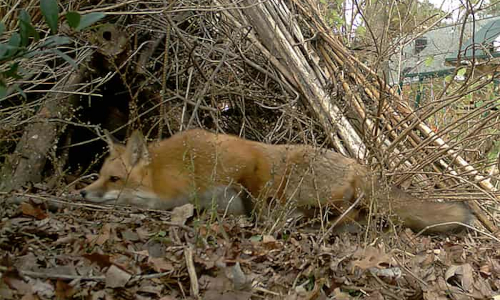
As temperatures drop, many creatures begin searching for safe places to overwinter. You can help by building simple forms of shelter that blend into the landscape. Pile branches or logs in quiet corners where they won’t be disturbed. Stand dead wood or stumps upright in shrubby areas to serve as perches and nesting spots.
Add a few shallow water dishes with stones or floating wood for birds and insects. Even small efforts can make a big difference for the species that keep ecosystems healthy. When we create these small sanctuaries, we’re not only helping wildlife survive the cold — we’re helping the land retain its diversity and resilience.
Thanks for reading about the various things we can do to help the Earth prepare for its “long rest” and maximize the gains of the previous year while aptly preparing for the next one. We hope you found it inspiring and educational – and remember, tread carefully and slowly – nature has ears everywhere, and she’s very tired, try and let her have a good sleep! Also, please download and share this handy infographic, courtesy of us: